
Overseeing the entire aviation industry isn’t a piece of cake. The International Air Transport Association (IATA) has been carrying this burden for decades. It relentlessly develops regulations, sets up procedures, creates digital tools – in short, it does everything to make international air transport safe and efficient.
Read our detailed IATA explainer or watch the video below if you’re not really familiar with what IATA is.

To make the whole system run like clockwork, IATA had to come up with diverse numbers and codes–to register and categorize all of its components. As we mentioned in the video, IATA loves all this coding stuff. In this post, we’ll dive deeper into this intricate cryptography and try to decipher it. We’ll talk about IATA numbers and their significance to travel agents, and also explore the main codes that standardize the aviation industry.

IATA numbers: verification for air ticket distributors
An IATA number (officially called the IATA Numeric Code) is basically a unique 7- or 8-digit code assigned to IATA-certified travel agencies that want to distribute air tickets and/or gain industry recognition. In addition, airlines’ own points of sale or sales offices also have an IATA number as an identifier of the location that issues flight tickets.
IATA acts as the mediator between airlines and travel agents, overseeing the cash streams and protecting the airlines’ interests. If you, as a travel agent, want to become a full member of this club, you’ll have to undergo a verification process.
Why do travel agencies need IATA numbers?
To start with, there are two main types of IATA accreditation: full and partial. These travel agency codes grant certified agents worldwide recognition as trustworthy and financially viable partners, allowing them to join the global industry community.
However, the full IATA accreditation package also allows travel businesses to issue tickets on behalf of airlines and process transactions via the Billing and Settlement Plan (BSP)–and that’s the main reason travel agencies apply for this IATA license.
If you want to sell flights but, for some reason, you can’t or don’t want to go through a complete verification process, there are options for non-IATA travel agencies. Most likely, you’ll have to partner with a mediator that has the right to issue those air tickets (such as a consolidator or a hosting agency) and use its credentials.

Types of IATA accreditation programs
So what are your choices if you’re a travel business considering getting an IATA number?
Full IATA accreditation. The complete IATA certification package is available for non-US-based travel agencies. It allows you to sell air tickets, gives access to IATA payment solutions, includes a PCI DSS (Payment Card Industry Data Security Standard) certification to enhance trust, and boosts your credibility as a professional.
Travel Industry Designator Services (TIDS). It’sthe partial accreditation program. The IATA/TIDS Code facilitates the identification of travel businesses and enables reservations to be recognized by travel suppliers such as cruise lines, hotels, car rental companies, and railways.
You can apply for TIDS free of charge if your business is located outside the US and you don’t issue air tickets but want to certify your professional status on a global scale.
IATAN accreditation. IATAN (International Airlines Travel Agent Network) is IATA’s subdivision that provides certification products exclusively to US-based travel professionals. Go with the full IATAN accreditation if you’re located in the US, have over two years of experience, and want to sell flights.
IATAN Non-ticketing accreditation. Similar to TIDS, this option doesn’t allow you to issue air tickets but gives access to airlines’ inventories and grants industry recognition.
How to get an IATA number?
Obviously, the amount of effort to exert, the fees to be paid, and the paperwork to submit will vary depending on the type of accreditation you plan to get.

IATA accreditation overview with application/registration fees
To give you an idea of the requirements, here are the key application steps for the full IATA package:
- register at the IATA Customer Portal;
- select one of the four available certification levels (GoLite, GoStandard, GoEurozone, or GoGlobal) and request your accreditation;
- fill out and submit an application form;
- submit additional documentation (proof of general business operations, proof of your qualifications, confirmation of prior travel agent experience, and proof of financial viability);
- pay the application fees and accreditation fees once you receive the invoice from IATA;
- provide financial security if required; and
- wait for confirmation (the review process might take a few weeks).
Note that for IATAN accreditation, you’ll be required to present the ARC Agency Code Number (read more about ARC accreditation in our dedicated post).
If you plan to apply for TIDS or IATAN Non-ticketing certifications, the requirements are less strict, and the whole process is a lot easier.
For a detailed guide on how to obtain each certification option, we recommend consulting our comprehensive overview of IATA accreditation. You can also visit the IATA’s official Travel Agency Program webpage or the IATAN site if you still have questions left. If you're interested in other travel agency accreditation options (e.g., CLIA or TRUE), we have them described in separate posts.
Those were the IATA numbers that matter most to most travel agents. However, IATA has more code types. Let’s have a look at what they are.
IATA’s codes: main industry identifiers
Standardization – or development and implementation of protocols, policies, processes, and, well, standards that ensure consistency and enable interoperability between parties within the industry – is one of IATA’s key areas of responsibility. And that’s why it devised multiple code systems – to unify the identification of locations, companies, equipment, etc., optimizing flight operations and information exchange. Here are the main aviation industry code systems.
Airline codes
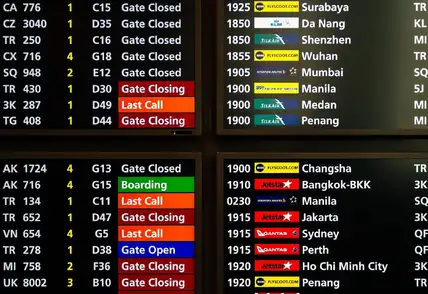
IATA assigns a unique two-character code (Airline Designator Code) to all airlines – even the ones that aren’t IATA members. It consists of 2 letters or a letter and a digit. For example, AA stands for American Airlines, KL for KLM, FR for Ryanair, B6 for JetBlue, etc.
These codes are used to identify an airline in a wide variety of commercial scenarios: reservations, schedules, timetables, telecommunications, ticketing, cargo documentation, legal, tariffs, etc.

Note that IATA’s 2-character codes are different from ICAO’s 3-character codes. ICAO, or International Civil Aviation Organization, also assigns airline designators, but these serve primarily for operational purposes like identification of aircraft in flight.
For example, Delta Air Lines has the DL designator from IATA and the DAL designator from ICAO.
Airport codes and other location identifiers
IATA’s location identifiers are 3-letter codes assigned to airports that have commercial activity. These codes can also be given to bus stations, heliports, rail stations, and ferry terminals if they are involved in intermodal airline travel.
In many cases, the airport code is derived from the city name, like ATL for Atlanta, IST for Istanbul, or MEX for Mexico City, making it easily recognizable.
If a city is served by more than one airport, IATA’s location codes are also assigned to such metropolitan areas. For example, the New York City region has the NYC code, which is different from the ones of the surrounding airports, i.e., John F. Kennedy International Airport (JFK), Newark Liberty International Airport (EWR), and LaGuardia Airport (LGA). Other examples of such metropolitan areas include London (LON), Tokyo (TYO), and Paris (PAR), among others.
These metropolitan area codes are widely used by booking engines of airlines, OTAs, and other distributors as they greatly facilitate the flight search in or out of the entire region.
ICAO also assigns airport codes. These are four characters long and, unlike IATA codes, the first one or two letters indicate the country or region. For example, airports in the United States begin with ‘K,’ so John F. Kennedy International Airport’s ICAO code is KJFK.
Interesting facts: As of today, IATA administers over 11,000 location identifiers worldwide. Some airport codes sound funny or weird. For example, the code for Pocos De Caldas Airport in Brazil is POO, and the code for Sembach Airport in Germany is SEX.
Accounting and prefix codes
Airline accounting and prefix codes are 3-digit numbers that are essential for various accounting activities. They identify airlines in all passenger and cargo traffic documents, transactions, and other relevant records. Passengers can find the accounting code on the e-ticket and sometimes on the boarding pass. It’s displayed as the first three digits of the 13-digit ticket number.
Note that the ticket number is not the same as the PNR (Passenger Name Record) number that’s created when the flight is booked, but before the ticket is issued.

The difference between the accounting code and the prefix code is that the former pertains to passenger operations, and the latter concerns cargo transportation. One airline can apply for both codes if its operations involve passenger and cargo service; in this case, it’ll be the same 3-digit number. For example, American Airlines has 001 as both an accounting and a prefix code, Air Canada has 014, Aeromexico has 139, etc.
Note that an airline must apply separately for a cargo prefix code even if it already has a passenger accounting code, and vice versa. IATA treats passenger and cargo operations as distinct business lines and accordingly has different requirements.
Baggage tag issuer code (BTIC)
Baggage tag issuer codes identify each piece of checked luggage through all baggage handling processes. The BTIC is a part of the so-called license plate code.
The license plate is a ten-digit numeric code on a bag tag, printed in both barcode form and human-readable form. It’s issued by the airline (or handling agent) at check-in to track luggage throughout the entire journey.
Interesting fact: Baggage handling practices have optimized a lot over the years, and in 2024, there were only 5,5 reported cases of lost luggage per 1,000 checked bags.
Other IATA codes
If you are a true code lover, you're gonna be so excited because we've got more of them for you. But those are the ones you won’t see on the boarding pass or the airport flight information display. They're service-type codes that are only used in the back office of airlines and airports. Here are some of them.
Aircraft Type Designators are 3-character codes distinguishing between aircraft types and variants that have differences from an airline's commercial perspective. They are used for airline timetables and computer reservation systems. For example, 744 stands for Boeing 747-400, 388 for Airbus A380-800, and D3F for Douglas DC-3.
Meal codes identify the types of meals served on board that are especially important to provide the right food to passengers with specific dietary requirements. Some examples are a diabetic meal (DBML), a gluten-free meal (GFML), a non-lactose meal (NLML), or a baby meal (BBML).
Geographic and currency codes can be found in the City Code Directory (CCD), which is a list of city, airport, country, province, state, and territory names and codes. It also contains a list of currency codes and IATA Tariff Conference areas. This information is used for computing tariffs, creating mileage distances, and calculating fares.
There are also Traffic Restriction Codes, Service Type Codes, Coordinator Reason Codes, etc.
Useful links for further research
If you want to dive even deeper into this coding topic, we've got a few more resources for you to explore.
You can download the complete Airline Designator Codes and Location Identifiers database from IATA’s website, as it’s the official industry source.
You can also use a free IATA online search tool to find airline and airport codes.
Here’s a list of IATA airline members with corresponding designator and accounting codes.
If you want to apply for a code, check out the requirements for obtaining an airline designator code, an accounting and/or prefix code, a location code, and BTIC.

Maria is a curious researcher, passionate about discovering how technologies change the world. She started her career in logistics but has dedicated the last five years to exploring travel tech, large travel businesses, and product management best practices.
Want to write an article for our blog? Read our requirements and guidelines to become a contributor.