Global Entry Freeze Puts US Airports at Risk as Business Travel Pushes Back
The Global Business Travel Association (GBTA) is urging the US Congress and the administration to restore Global Entry after the Department of Homeland Security (DHS) suspended the program on February 22, 2026, during the partial DHS funding shutdown that began on February 14.
GBTA argues that the suspension can slow border processing, create airport congestion, and disrupt business travel at a time when companies rely on fast international movement for meetings, operations, and client work. GBTA said it sent a letter to bipartisan congressional leaders warning about these risks.
The issue affects business operations, not only passenger comfort
GBTA is framing Global Entry as part of the travel infrastructure. Its point is simple: when travelers spend more time in lines, companies lose time, schedules become less reliable, and travel programs become harder to manage.
The group links this to the scale of the US business travel market, citing projected spending of $395.4 billion this year and broader direct spending of nearly $421 billion annually. In practice, this means slower border processing can affect sales trips, project timelines, and service teams — not just individual traveler experience.
Why Global Entry matters for both speed and security
Global Entry is a Trusted Traveler program for pre-approved, low-risk travelers entering the US. Members go through background checks, interviews, and biometric enrollment before they are approved. GBTA says this helps security agencies work more efficiently because officers can spend more attention on unknown or higher-risk travelers while processing pre-vetted travelers faster.
What happened at DHS and why the response drew criticism
The issue escalated quickly because DHS initially announced steps affecting both Global Entry and TSA PreCheck, then reversed course on TSA PreCheck while Global Entry remained suspended. That created confusion and drew criticism from travel groups and lawmakers, who argued the policy would make airport processing less efficient. Additionally, Global Entry is largely fee-funded and helps reduce congestion, which makes the suspension harder to justify from an operations standpoint.
What to expect next
The latest pressure is moving in one direction: travel groups and lawmakers want Global Entry restored quickly, and GBTA is also calling for a bipartisan deal to end the partial DHS shutdown. The near-term question for the travel industry is whether policymakers act fast enough to prevent longer disruption as international travel demand remains strong. If the shutdown continues and Global Entry stays suspended, airport processing delays and business travel friction may become more visible in the coming days.
The partial DHS shutdown has raised concerns about TSA staffing pressure and the risk of longer lines as disruption spreads across the airport system. That wider context helps explain why GBTA is treating the Global Entry suspension as more than a policy change for frequent travelers — it is part of a broader risk to airport efficiency, traveler processing, and business travel reliability in the US.
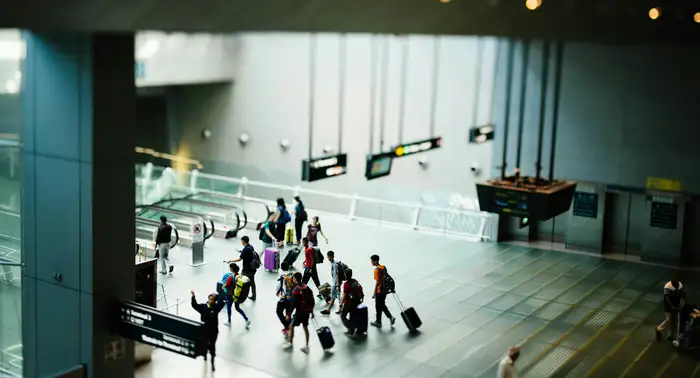
Photo by CHUTTERSNAP on Unsplash
Hot News
Uber and Joby Put Air Taxis in the App, Dubai Becomes First Test Market

Global Entry Freeze Puts US Airports at Risk as Business Travel Pushes Back

Trip.com Earnings Got a Major Boost in 2025

Etihad Reports Record 2025 Profit as Expansion Delivers Results
