Airline Fares Jump 24% as Iran War Disrupts Key Routes
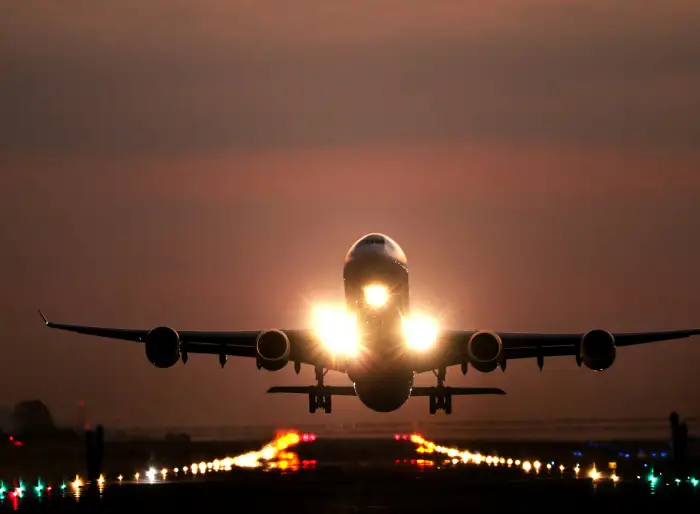
Air fares have risen after the war involving the US, Israel and Iran disrupted one of the world’s most important flight corridors.
Airlines are now dealing with two problems at once: many flights must avoid affected airspace, and jet fuel has become much more expensive.
The biggest impact is on routes between Europe and Asia, and between Europe and Australia. Many of these journeys normally rely on Gulf hubs and carriers.
How Gulf disruption is pushing up costs on long-haul routes
The Middle East plays a central role in long-haul aviation. Airlines such as Emirates, Qatar Airways, and Etihad carry large numbers of passengers between Europe, Asia, and Australia through their Gulf hubs.
Flights are taking longer routes to avoid restricted areas, which increases fuel use and makes operations less efficient. At the same time, disruption to Gulf carriers has reduced seat capacity on some long-haul routes.
Long-haul ticket prices are rising sharply
The cheapest economy fares are now about 24 percent higher on average than a year ago. Some routes have seen much steeper increases.
A London to Melbourne ticket in June is reported to cost 76 percent more than last year, while Hong Kong to London is up 72 percent.
These increases show how quickly fares can rise when airlines face both higher operating costs and fewer available seats. The pressure is strongest on routes where Gulf airlines usually play a major role in connecting long-haul travelers.
Fuel is adding even more pressure for airlines
Jet fuel is one of the biggest airline expenses, often accounting for around a quarter of operating costs. Recent estimates suggest prices have climbed from about $85–$90 per barrel to roughly $150–$200 per barrel in just a few weeks.
Fuel costs are starting to reshape airline network choices
Qantas has started shifting capacity away from some US routes and toward Europe after the Middle East conflict pushed jet fuel costs higher and made some parts of its network less attractive. That adds useful context here: the current fuel shock is not only raising fares, but is also starting to influence where airlines choose to fly and where they see stronger returns.
Photo by Josue Isai Ramos Figueroa on Unsplash
Hot News
Delta Buys Spirit Gates as Atlanta Rivals Run Out of Room

Bolt Targets Messy Ride Expenses With New Employee-Pay Mode

FAA Eyes AI for Air Traffic Safety as Runway Risks Keep Rising

TPConnects Launches Iris Express API to Cut NDC Complexity
