Middle East Airlines Face $4.3B Loss as War Breaks the Hub Model
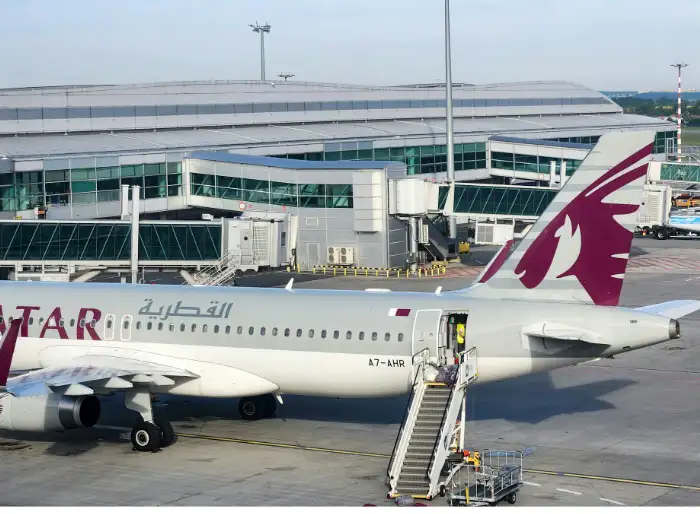
Middle East airlines are expected to lose $4.3 billion in 2026, according to the International Air Transport Association (IATA).
IATA released the updated forecast at its annual general meeting in Rio de Janeiro.
The Middle East is now the only major airline region expected to report a net loss this year. Other regions are still forecast to make money, although global airline profits are also expected to be weaker than previously projected.
The downgrade reflects two main problems: regional conflict is disrupting flight operations, and fuel prices are rising sharply. Both are especially painful for Gulf airlines, which depend on long-haul routes and large connecting hubs.
War disruption weakens the Gulf hub model
The Gulf is one of the most important connecting points in global aviation. Airlines such as Emirates, Qatar Airways, Etihad Airways, and Saudia use airports in Dubai, Doha, Abu Dhabi, Riyadh, and Jeddah to connect passengers between Europe, Asia, Africa, Australia, and the Americas.
This model depends on stable airspace and reliable schedules. When flights are canceled, delayed, or rerouted, connections become less attractive. Some passengers may choose other routes to avoid uncertainty.
IATA expects passenger demand in the Middle East to fall 11.4 percent in 2026. Capacity is expected to decline 4.4 percent. Airlines may carry fewer passengers while still dealing with high fixed costs, including aircraft, crews, maintenance, and airport operations.
Fuel prices make the financial hit worse
Fuel is one of the largest costs for airlines, and IATA expects the global fuel bill to rise from $252 billion in 2025 to $350 billion in 2026. The forecast assumes crude oil at $95 per barrel and jet fuel at $152 per barrel.
This is a serious problem for long-haul carriers because they operate large aircraft over long distances. Rerouting around restricted airspace can also increase fuel use and make each flight more expensive.
Airlines may try to raise fares or reduce weaker routes, but they cannot always recover the full cost. If demand is soft, higher prices can push some travelers to delay trips, choose other hubs, or avoid less reliable connections.
Global airline profits are also under pressure
IATA now expects global airlines to earn $23 billion in net profit in 2026. That is far below the earlier forecast of $41 billion and about half of the $45 billion estimated for 2025.
The industry is still profitable overall, but margins are much thinner. IATA expects airlines to earn only $4.50 per passenger in 2026, down from $9.10 in 2025.
That leaves airlines with less room to absorb extra costs. Higher fuel prices, aircraft delivery delays, labor expenses, and airport charges can quickly weaken results, especially for smaller or less profitable carriers.
Recovery depends on airspace stability and fuel prices
The outlook for Middle East airlines will depend on how quickly regional tensions ease. If airspace becomes more predictable, Gulf carriers could restore schedules and rebuild transfer traffic.
The pressure is already showing up beyond the Middle East. Airline fares have jumped 24 percent on some disrupted routes as the Iran war pushed jet fuel costs higher and forced carriers to rethink capacity. Qantas, for example, started shifting some capacity away from US routes and toward Europe, showing that the fuel shock is not only raising costs but also changing how airlines decide where to fly.
Photo by Ish Consul on Unsplash
Hot News
Delta Buys Spirit Gates as Atlanta Rivals Run Out of Room

Bolt Targets Messy Ride Expenses With New Employee-Pay Mode

FAA Eyes AI for Air Traffic Safety as Runway Risks Keep Rising

TPConnects Launches Iris Express API to Cut NDC Complexity
