Ryanair Plans for a Record London Summer Schedule. Why Isn't It Afraid of Fuel Shortages?
What happened?
Ryanair has launched a record London summer 2026 schedule, adding five new routes, increasing frequencies on more than 50 others, and basing one extra aircraft at Stansted. The move gives the airline 194 London routes for the season and strengthens one of its biggest UK markets.
The announcement came only days after Ryanair warned that the UK was the European market most exposed to possible jet fuel shortages if disruption in the Gulf continues. But if the risk is real, why is Ryanair still adding more flights?
Why is the UK most at risk from fuel shortages?
Ryanair says the UK is particularly exposed because it relies heavily on Kuwaiti fuel supplies. Ryanair CEO Michael O’Leary said Britain is the European market most exposed if Gulf disruption continues and starts to affect supply into Europe from June. Europe gets up to 30 percent of its jet fuel from the Gulf, which helps explain why any longer disruption there could hit airlines quickly.
Ryanair’s argument has two layers: the UK is exposed through its own supply links, and Europe more broadly is exposed because a large share of its jet fuel comes from the Gulf.
The key point is that this is not just a price story. Ryanair is warning about a supply risk. If enough fuel does not reach the market, airlines may struggle to operate full summer schedules even if demand remains strong.
If that fuel risk is real, why is Ryanair still adding more London flights?
Because Ryanair is treating this as a later-summer risk, not a current reason to cut now. O’Leary said suppliers still expected conditions to remain stable through May, so Ryanair is still planning around demand rather than a confirmed shortage.
London is also too important a market for Ryanair to scale back. The airline says it expects 61 million UK passengers in 2026 and already carries almost twice British Airways’ UK traffic. From Ryanair’s perspective, it makes sense to keep growing in a core market now and adjust later only if the fuel picture worsens.
Why are other airlines cutting flights while Ryanair is growing, and does Ryanair have an advantage they do not?
Some airlines are already cutting flights because higher fuel costs are hurting them now. KLM will cancel 160 European flights over the coming month because of rising fuel costs. SAS cut around 1,000 April flights after jet fuel prices surged in early March.
Ryanair is taking a different approach, but not because it is expanding everywhere. It is being selective. While it is growing in London, it is also cutting back where the economics look weaker. In late April, the airline said it would phase out its Berlin base, cut winter flights there by 50 percent, and move aircraft to lower-cost airports in other EU markets. That makes the strategy clearer: Ryanair is reallocating capacity toward markets where returns look stronger and away from markets where taxes, fees, and weaker traffic make growth less attractive.
Could Ryanair still be forced to cut flights later if the fuel disruption gets worse?
Yes. That remains a real possibility. Reuters reported that O’Leary warned up to 10 percent to 20 percent of fuel supply could be at risk in June, July, or August if the disruption continues. In that scenario, airlines could be forced to cancel flights or take capacity out of the market.
So the current London build-up is not a guarantee that nothing will change. It means Ryanair does not yet think the situation is bad enough to justify cutting there now. If the fuel picture worsens, the airline could still scale back later.
So, is Ryanair taking a smart risk or just a bigger gamble?
Ryanair is clearly accepting a risk, but its strategy is not to ignore the fuel threat. It is choosing to keep growing in markets it still sees as worth defending, while keeping the flexibility to move aircraft or cut capacity elsewhere if conditions worsen.
That means the London expansion looks less like a blanket sign of confidence and more like a selective growth move based on today’s conditions. If Gulf disruption eases, Ryanair may benefit from expanding while others stay cautious. If it gets worse, the airline may still have to cut later.
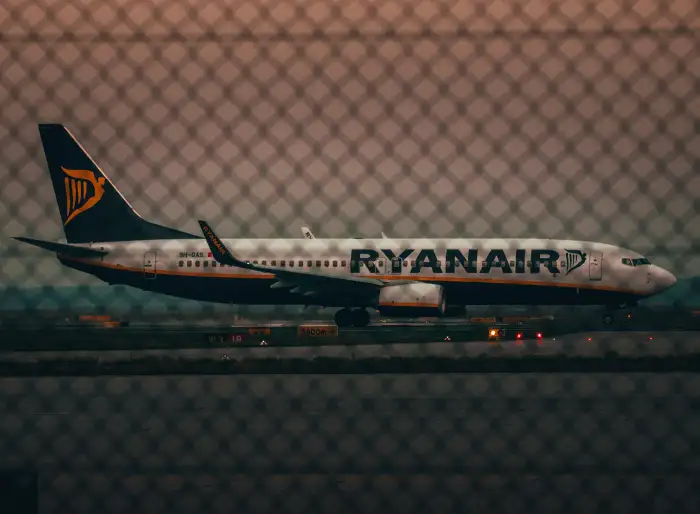
Photo by Nejc Soklič on Unsplash