How Winter Olympics Impact Italy's Tourism in February 2026 and Beyond
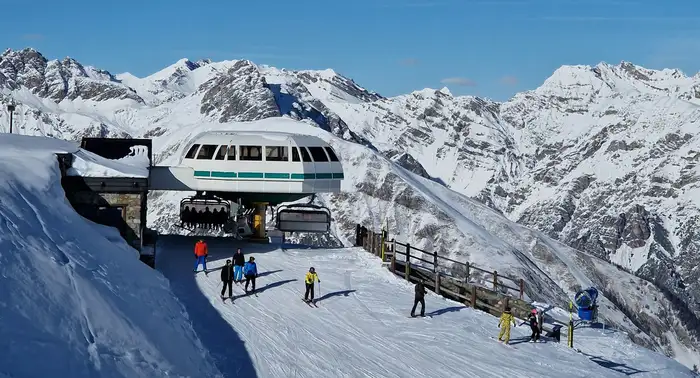
What happened?
The 2026 Winter Olympics have officially opened, immediately placing Milan and Cortina d’Ampezzo at the center of global attention. As the main host cities, they are experiencing the strongest impact from the influx of visitors tied to the Games.
How many are traveling for the Olympics?
The Olympics are drawing more than 3,500 athletes from around the world, along with support teams, sponsors, athletes’ families, corporate guests, and international media.
Event organizers estimate that as many as 2 million visitors are traveling specifically to the Winter Olympics, staying in host cities and surrounding areas during the competition period from February 6 to February 22, 2026.
According to Andrea Francisi, the Olympics’ chief games operations officer, 127,000 tickets were sold in just the first two days of competition. That rapid pace pushed the total number of tickets sold to 1.2 million so far, indicating solid early engagement from fans.
Is 2 million a lot for the Winter Olympics?
It definitely is, especially when comparing 2026 with Beijing 2022 and PyeongChang 2018.
In-person attendance at Beijing 2022 was extremely restricted, as COVID-19 measures prevented public ticket sales, which kept the number of visitors very low, with fewer than 100,000 spectators attending.
Meanwhile, PyeongChang 2018 took place under normal global conditions: over one million of foreign visitors traveled to South Korea for the Games, and under 60 percent of total tickets were sold during the opening days.
What is the impact on Italy’s tourism and travel businesses?
Data from Visa Consulting & Analytics indicates a dramatic rise in air travel to the Olympic host regions. Flight bookings are projected to increase by more than 160 percent compared with the same period last winter. The strongest waves of international arrivals are expected from the US, Germany, the UK, Canada, Switzerland, and France.
Hotels and short-term rentals in and around the Olympic zones are also feeling the impact. VegasInsider's analysis of accommodation listings across key host destinations, including Milan, Cortina d’Ampezzo, Val di Fiemme, Livigno, and Bormio, reveals significant price increases in February 2026.
In Milan, average full-stay prices during the Games reached €2,602 ($3,100) on Airbnb and nearly €5,926 ($7,050) on Booking.com. These levels represent increases of 55 percent and 84 percent, respectively, compared with rates observed in March 2026.
In alpine host locations, such as Cortina d’Ampezzo and Livigno, some listings show triple-digit percent price increases compared with post-Olympic periods due to fewer available options.
How did Italy prepare for this surge of travelers?
Event managers and public authorities coordinated investments to ensure the country could handle an unusually high concentration of visitors. Overall, the government allocated approximately €1 billion ($1.19 billion) through a special Olympics decree, targeting physical infrastructure, transport networks, and accommodation readiness.
Work to improve access and mobility began years before the opening ceremony. Many of the most important transport initiatives were completed in 2025 and early 2026, just ahead of the Games.
For example, Milan Malpensa Airport, a primary gateway for international arrivals, invested approximately €30 million ($35.7 million) in upgrades to speed up passenger processing, particularly during periods of heavy traffic tied to Olympic delegations and spectator arrivals.
In Lombardy and surrounding regions, authorities added more regional train services, extended metro capacity, and introduced shuttle connections to competition clusters. These measures are especially important in mountainous areas where road access can be slower and more vulnerable to congestion.
What can Italy expect once the Games end?
Instead of a short-lived spike, the Olympics are expected to sustain a rise in travel interest toward Italy. International visibility, global media exposure, and improved infrastructure are likely to keep the country high on travelers’ consideration lists.
According to Oxford Economics, Italy is projected to welcome about 66.7 million international visitors in 2026, representing a 9.3 percent year-over-year increase.
International arrivals to Milan alone are forecast to climb 10.7 percent, though the tourism gains are not expected to remain concentrated in one city. Cities like Venice and Verona are positioned to capture additional demand from travelers combining Olympic-related trips with broader sightseeing. At the regional level, Northern Italy is projected to see nights spent by visitors grow faster than the countrywide average.
Additionally, Italy’s domestic market is forecast to remain strong. Nights spent by local travelers are expected to rise 5 percent year over year, reaching 229 million in 2026.
Two structural factors support this resilience. First, venues are geographically dispersed rather than concentrated in a single city, thereby spreading visitor flows. Second, improved rail connectivity makes it easier for residents to travel without facing extreme congestion, helping maintain internal tourism activity.
Photo by Michał Wazowski on Unsplash