DXB Delays 100 Million Target After March Traffic Falls 66 Percent
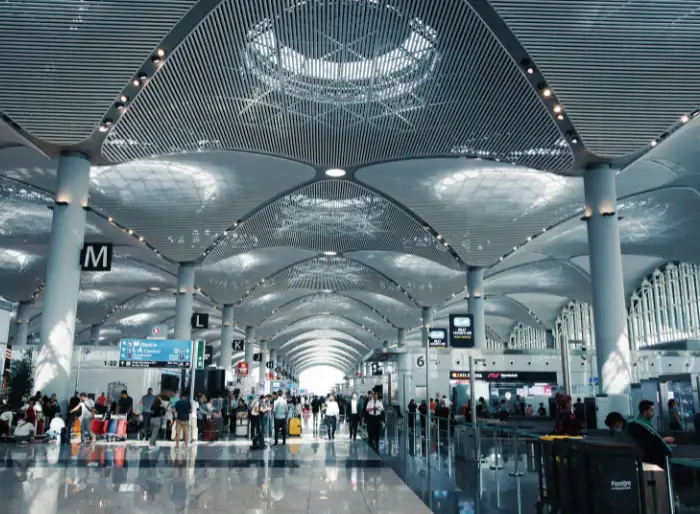
Dubai International Airport (DXB) saw a major traffic drop in March 2026 after airspace disruption reduced flight activity across the Middle East.
The airport handled 2.5 million passengers in March, down 65.7 percent from the same month last year. That pushed first quarter traffic down to 18.6 million passengers, a 20.6 percent year over year decline.
The fall also delayed one of Dubai’s biggest aviation goals. Dubai Airports CEO Paul Griffiths had expected DXB to come close to 100 million passengers in 2026. After the March collapse, he said the milestone will likely move to 2027.
The slowdown hurt Dubai’s role as a global transfer hub
DXB is not only Dubai’s main airport. It is one of the world’s busiest international hubs and a key connection point for flights between Asia, Europe, Africa, and the Middle East.
The disruption also affected cargo and airline operations. DXB handled 399,600 tonnes of cargo in the first quarter, down 22.7 percent, while aircraft movements fell 20.8 percent to about 88,000. These declines show that the crisis hit both passenger travel and freight flows, which are important to Dubai’s aviation, trade, and tourism economy.
Dubai’s largest markets show where recovery may come from
India remained DXB’s biggest country market in the first quarter, with 2.5 million passengers. Saudi Arabia followed with 1.3 million, the UK with 1.2 million, and Pakistan with 918,000. London was the airport’s busiest city route, followed by Mumbai and Jeddah.
These routes bring different types of demand. India and Pakistan support large family, work, business, and leisure travel flows. Saudi Arabia brings strong regional traffic, while the UK remains one of Dubai’s most important long haul markets. If these routes recover quickly, DXB can rebuild part of the lost traffic in the second half of the year.
Operations are being restored as UAE airspace returns to normal
Dubai Airports is now scaling up operations after the UAE restored its airspace. The restrictions had been in place since February 28, and the UAE’s aviation authority said air traffic had returned to normal status in early May.
During the disruption, Dubai’s airports still handled more than six million passengers, over 32,000 aircraft movements, and 213,000 metric tons of cargo.
Dubai still sees long term growth beyond the 2026 setback
Dubai’s longer term airport expansion plans remain in place. The emirate is continuing development of Dubai World Central, also known as Al Maktoum International Airport.
The setback also fits the wider pressure on Gulf aviation this spring. Middle East airspace closures forced airlines to cancel, reroute, or reduce flights through major hubs such as Dubai, Abu Dhabi, and Doha.
Photo by Artem Bryzgalov on Unsplash
Hot News
Delta Buys Spirit Gates as Atlanta Rivals Run Out of Room

Bolt Targets Messy Ride Expenses With New Employee-Pay Mode

FAA Eyes AI for Air Traffic Safety as Runway Risks Keep Rising

TPConnects Launches Iris Express API to Cut NDC Complexity
