TAP Air Portugal Profit Streak Continues with $4.8M in 2025
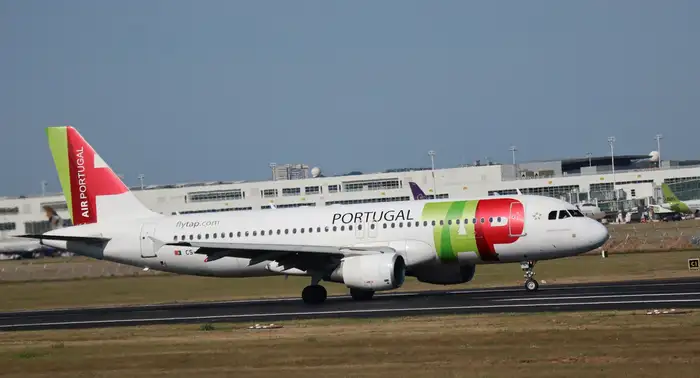
TAP Air Portugal has reported a net profit of €4.1 million ($4.8 million) for 2025, extending its streak of positive financial performance and marking its fourth consecutive year in profit since recovering from the financial turmoil caused by the pandemic.
The relatively modest profit figure was significantly affected by a €42 million ($49 million) corporate income tax adjustment. This adjustment is linked to Portugal’s gradual reduction in corporate tax rates, which had a notable accounting impact on the airline’s final net result.
Revenue growth supported by maintenance and passenger demand
For the full year, the airline generated €4.3 million ($5 million) in operating revenue, representing a 1.2 percent increase compared to 2024.
While overall growth was moderate, different parts of the business performed unevenly. The maintenance division stood out as a key driver, delivering a strong 10.7 percent increase in revenue. Passenger-related income also grew, but at a slower pace of 0.8 percent.
Operationally, TAP carried 16.7 million passengers in 2025, which reflects a 3.4 percent year-on-year increase. The airline also improved its load factor to 84.2 percent, rising by 1.9 percent, indicating better seat utilization across its network.
Pressure on unit revenue amid rising competition
Despite increases in capacity and traffic volumes, the airline faced challenges in maintaining its revenue efficiency.
Capacity expanded by 3.1 percent, while revenue passenger kilometers grew by 5.5 percent, showing stronger demand in terms of distance traveled. However, unit revenue declined, highlighting underlying pressure on pricing.
Passenger revenue per available seat kilometer (PRASK) fell by 2.3 percent to 6.96 cents. This drop reflects intensifying competition in TAP’s core markets, along with softer demand conditions, particularly on North American routes, which have become more volatile.
Rising costs and operational margins
On the cost side, recurring operating expenses increased by 3.6 percent, reaching €4 million ($4.7 million).
Several cost categories contributed to this rise. Staff-related expenses grew by 7.9 percent, traffic-related costs increased by 6.7 percent, and depreciation and amortization rose sharply by 10.8 percent. These increases were partially offset by a 5.4 percent reduction in fuel costs, which helped ease overall cost pressure.
Recurring cost per available seat kilometer (CASK) rose slightly by 0.5 percent to 7.36 cents.
Despite cost increases, TAP achieved a recurring EBITDA of €742.9 million ($871.3 million), corresponding to a margin of 17.2 percent, and a recurring EBIT of €243.4 million ($285.5 million), with a margin of 5.6 percent.
The airline also noted that the first quarter of 2025 was particularly difficult, which influenced full-year performance.
Financial position and privatization developments
TAP reported a liquidity position of €765.3 million ($897.5 million), representing an improvement of €113.7 million ($133.4 million) compared to 2024.
The airline’s net debt to EBITDA ratio stood at 2.6x, indicating a relatively stable financial structure as it continues to recover.
These results come at an important time for the company’s ownership structure. With the European Union restructuring plan now completed, the Portuguese government is moving forward with plans to sell a 44.9 percent stake in the airline, with an additional 5 percent reserved for employees.
Major European airline groups, including Lufthansa and Air France-KLM, have shown interest in acquiring a stake. TAP’s strategic value lies in its strong hub in Lisbon and its extensive network connecting Europe with Brazil, Africa, and the US, making it an important player in long-haul and connecting traffic markets.
Photo by Stroopsniper Lenn on Unsplash
Hot News
Spotnana Adds Premier Inn for Greater Corporate Booking Control

TAP Air Portugal Profit Streak Continues with $4.8M in 2025

Hopper Replaces Expedia in Exclusive Banking Travel Deal

Only Matter of Time: Delta, Southwest, American Raise Fees
