Stranded Travelers Return from UAE as Risk for Civil Aviation Continues
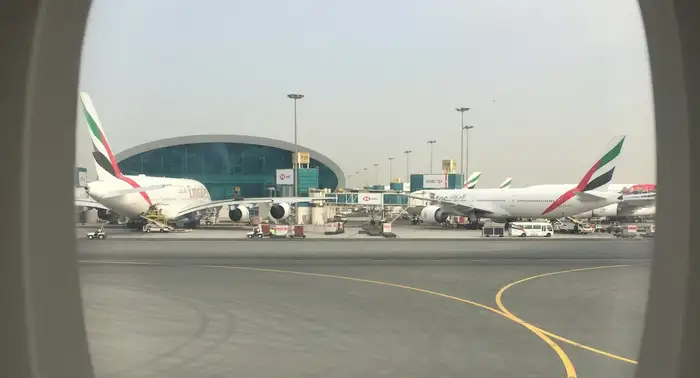
Only a limited number of aircraft have been able to depart from the United Arab Emirates, with most regional airspace subject to sudden closures, rerouting, and operational uncertainty. Meanwhile, air travel across the Middle East remains heavily disrupted as the joint Israeli and US military campaign against Iran continues to escalate.
After several days of near paralysis, a small number of evacuation and scheduled flights resumed on Monday. Governments worldwide have been scrambling to organize extraction efforts for their citizens.
First evacuation flights bring Europeans home
Major UAE-based airlines, including Etihad Airways, Emirates, and low-cost carrier Flydubai, confirmed they would operate a restricted number of flights.
The first group of European travelers stranded in the region managed to return home overnight. Media outlets in the UK, the Czech Republic, Italy, and Poland reported successful evacuations from Oman and the UAE after a small number of flights were cleared for departure.
One example was Etihad Airways flight EY67, which transported stranded UK nationals from Abu Dhabi. According to flight tracking data from Flightradar24, the aircraft departed on Monday afternoon and arrived at London Heathrow later that evening. The successful operation offered a measure of relief, though it represents only a fraction of those still waiting to leave.
Governments expand evacuation plans as risks remain
Officials continue to assess the scale of the evacuation challenge. UK Home Secretary Yvette Cooper stated that 102,000 British nationals had formally registered their presence in the region. In total, approximately 300,000 British citizens are believed to be located in Gulf countries that have been targeted by Iranian strikes.
Overall, hundreds of thousands of foreign nationals are still believed to remain in place. Many governments are intensifying evacuation planning while simultaneously advising citizens to shelter indoors and follow local safety guidance until secure departure options become available. Authorities emphasize that departures will remain limited and subject to sudden change until regional airspace conditions stabilize.
Thousands of cancellations affect over one million passengers
Since Saturday, at least 11,000 flights within, into, and out of the Middle East have been canceled, disrupting travel plans for more than 1 million passengers.
By Monday morning, cancellation rates illustrated the severity of the disruption, which grounded
- 79 percent of global flights to Qatar,
- 71 percent of flights to the UAE,
- 81 percent of flights to Israel, and
- 92 percent of flights to Bahrain.
This war in the Middle East came more than a month after the European Union Aviation Safety Agency (EASA) issued a safety advisory urging European and EU-regulated airlines to halt operations over Iranian airspace. The January 2026 warning cited heightened regional tensions and potential threats to civilian aircraft.
Photo by Milind Shah on Unsplash
Hot News
United Reaches New Flight Attendant Deal After Labor Revolt

Convene Gets $230M to Grow Its Meetings Business and Add More Brands

Trip.com Rolls Out Local Payment Play as Travel Growth Gets More Complex

UAE Hotel Joins Climate Pact, Emissions Reporting Comes Next
