Singapore Airlines Q3 Net Profit Fell, but Revenue Hit a Record as Travel Demand Stayed Strong
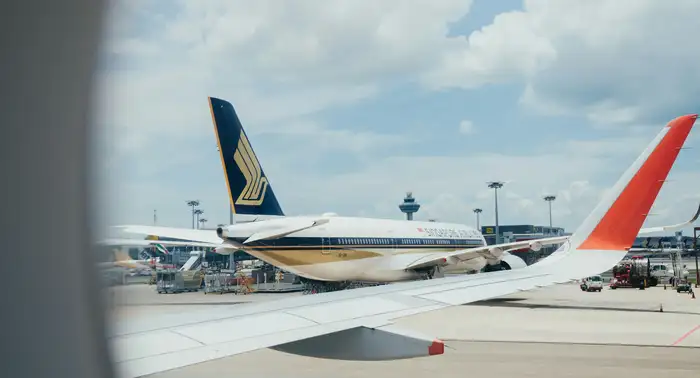
Singapore Airlines (SIA) reported a sharp drop in net profit for the third quarter of FY2026 (the quarter ended December 31, 2025), but the headline number does not show the full picture. Net profit fell 68.9 percent year on year to S$505 million(US$399.2 million), while revenue rose to a record S$5.506 billion(US$4.35 billion), and operating profit increased to S$792 million(US$626.1 million).
Singapore Airlines counts quarters on its own fiscal year, not the calendar year used by many companies. Its financial year runs from April to March, so its third quarter (Q3 FY2026) covers October to December 2025, not July to September.
The main reason for the lower net profit was not weaker travel demand. Last year’s quarter included a large one-off, non-cash gain of S$1.098 billion (US$868.0 million) linked to the Vistara disposal after the Air India-Vistara merger. That gain did not repeat this year, which made the year-on-year comparison look much worse.
Compared with the same quarter last year, the core business improved
A clearer comparison shows that SIA’s operating business was stronger than a year earlier. In the third quarter FY2026, revenue increased to S$5.506 billion (US$4.35 billion) from S$5.219 billion (US$4.13 billion) in the third quarter FY2025, while operating profit rose to S$792 million (US$626.1 million) from S$629 million (US$497.3 million). This means the airline earned more from its normal operations even though reported net profit was much lower.
Passenger demand also improved versus the same quarter last year. SIA carried 10.9 million passengers in the third quarter, up 6.3 percent year on year, and passenger load factor increased to 87.5 percent from 87.2 percent. In simple terms, more people flew with the group and planes stayed very full.
Air India-related losses were a bigger drag this time
Another major reason net profit fell was higher losses from associated companies, especially Air India. SIA said its share of associate losses rose to S$178 million (about US$140.7 million) in the third quarter, up by S$163 million (US$128.9 million) year on year. The increase was largely because SIA recognized a full quarter of Air India losses this time, compared with only one month in the same period last year.
This is important context because it shows the pressure on net profit came partly from investment-related accounting, not just from SIA’s own airline operations. SIA has said it remains committed to supporting Air India’s transformation, which means this remains a long-term strategic investment story as well as a quarterly earnings story.
Nine-month results show the same pattern
The same trend appears in the first nine months of FY2026. Net profit fell 68.6 percent to S$743 million (US$587.3 million) from S$2.368 billion (US$1.87 billion) in the same period last year. However, revenue rose 3.2 percent to a record S$15.181 billion (US$12.00 billion), and operating profit increased 11.9 percent to S$1.595 billion (US$1.26 billion) from S$1.425 billion (US$1.13 billion).
Passenger performance remained healthy over the nine months. The group carried 31.6 million passengers, up 7.4 percent year on year, and passenger load factor improved to 87.7 percent. These numbers support the view that travel demand across SIA’s network stayed strong even as the reported bottom line came under pressure.
What to expect next
Cargo performance was more mixed than passenger performance. In the third quarter, cargo load factor slipped slightly to 56.3 percent, and for the first nine months it declined to 56.5 percent, reflecting softer cargo conditions and ongoing uncertainty in global trade and geopolitics.
Looking ahead, SIA said passenger demand remains healthy heading into the March quarter. The key thing to watch next is whether strong passenger demand continues to support revenue growth while cargo weakness and Air India-related associate losses keep weighing on reported net profit.
Broader destination data supports that outlook: Singapore’s tourism receipts reached a record S$23.9 billion (US$18.8 billion) in the first nine months of 2025, showing that high-value travel demand into Singapore remained strong even as some airline profit lines were affected by accounting comparisons and associate losses.
Hot News
Delta Buys Spirit Gates as Atlanta Rivals Run Out of Room

Bolt Targets Messy Ride Expenses With New Employee-Pay Mode

FAA Eyes AI for Air Traffic Safety as Runway Risks Keep Rising

TPConnects Launches Iris Express API to Cut NDC Complexity
