Can I Travel to Greenland? Is it safe? Does the Debacle Impact Flights?
What happened?
US President Donald Trump has doubled down on his ongoing push to bring Greenland under American control, insisting there is “no going back.”
During the Davos World Economic Forum, Trump reiterated his strong views on why this Arctic spot matters so much to American defenses and global stability. At the same time, he ruled out the possibility of military force and dropped the threat of tariffs on European countries opposing the push.
Still, Trump maintained pressure by warning, "You can say yes, and we will be very appreciative, or you can say no, and we will remember," signaling the issue remains unresolved.
How is Europe reacting to Trump’s Greenland rhetoric?
European leaders have pushed back hard against the notion of the US eyeing control over a self-governing part of a NATO partner, calling it a throwback to colonialism and a direct threat to Europe's safety and economic well-being.
French President Emmanuel Macron, for example, slammed Trump's position as a blatant breach of national sovereignty and international rules, sparking concerns that it undermines the key post-World War II principles that hold transatlantic ties together.
European Commission President Ursula von der Leyen stressed that Europe needs to protect Denmark and Greenland's borders while building up its own independent defenses, hinting that Trump’s statements are forcing the EU to reassess its security strategies and reduce dependence on the US.
Beyond the official backlash, the public is speaking out, too. Protests with chants like “Hands off Greenland” have been taking place in Greenland and Denmark, showing broad local rejection of handing control over to the US.
A survey published by Greenlandic newspaper Sermitsiaq further supports this claim: about 85 percent of Greenland residents said they do not want their island to become part of the US.
Over time, if it escalates, this situation could reshape Europe's approach to the US across trade deals, Arctic defense efforts, and travel operations.
Have the US tensions affected Greenland tourism?
The answer is yes. However, the reactions from tourists have been mixed.
For example, Air Greenland reported a notable spike in travel demand, with increased bookings and an unusual surge in late-season reservations, according to a spokesperson speaking with Skift.
Website traffic also rose, with visitors spending more time exploring flights, schedules, and informational content about Greenland. While most interest still comes from Denmark and the island itself, engagement is also growing from the US, the UK, and Germany, reflecting broad curiosity tied to geopolitical attention.
On the other hand, a Dutch travel agency, Aurora Reizen, said bookings to Greenland have dropped by 20–30 percent, while an Iceland-based travel agency, Arctic Yeti, has also seen a decrease.
All in all, we cannot say for sure whether the impact is positive or negative. While some are curious about the new travel destination, others decide to be cautious and delay their trips.
What about the impact on US tourism?
The US faces a more uncertain situation, seemingly experiencing an unofficial boycott.
Discussion of a boycott for the 2026 FIFA World Cup, taking place from June 11 to July 19, 2026, across the US, Canada, and Mexico, has been gaining significant political and public attention in Europe.
Former FIFA president Sepp Blatter, for example, publicly backed calls for fans to avoid US games, citing safety and political concerns related to the Trump administration’s policies.
Pieth said, “If we consider everything we’ve discussed, there’s only one piece of advice for fans: Stay away from the USA! You’ll see it better on TV anyway. And upon arrival, fans should expect that if they don’t please the officials, they’ll be put straight on the next flight home. If they’re lucky.”
Meanwhile, Oke Göttlich, VP of the German Football Association, emphasized that it’s “time to seriously consider” boycott discussions, also referring to geopolitical tensions.
Even if there’s no official boycott and no national team has formally pulled out yet, the chatter may still impact travel behavior. FIFA World Cups typically drive immense international travel, with millions of fans flying to host nations, booking hotels, renting cars, and buying other local services. Any shifts in fan sentiment could meaningfully reduce anticipated revenue, though we have yet to see the ultimate impact.
If escalated, how could the Greenland tensions disrupt travel?
The leading concern is the impact on civil aviation in Greenland and the wider Arctic.
If tensions escalate, authorities could establish no-fly zones over Greenland and reroute polar flight paths, resulting in longer flight times, higher fuel consumption, and increased congestion.
This would not only impact Greenland airports and domestic travel but also disrupt the transatlantic routes that depend on these efficient high-latitude corridors. We cannot say for sure how exactly these two aspects would be affected if tensions rise, but knowing why they matter helps put the situation into perspective.
Why are Greenland airports so important?
Almost all long-distance travel in Greenland relies on aircraft, from small turboprops serving remote settlements to larger jets connecting Nuuk with Iceland and Denmark, as well as seasonal flights to the US.
Greenland’s unique geography, with no roads linking towns and small population centers spread along fjords and coasts, makes aviation absolutely essential.
Moreover, Greenland’s airports already face capacity constraints and operational challenges even without any geopolitical pressures.
For example, in 2025, Danish authorities set strict flight movement limits at Nuuk Airport, limiting operations to a maximum of four per hour to ensure safety. This has reduced scheduling flexibility, limited domestic–international connections, and forced travelers to overnight stays during weather disruptions.
Any rise in political tension could trigger additional airspace restrictions, further complicating flights and, in turn, hindering all passenger and cargo operations.
What about the transatlantic paths?
Greenland’s position along major high-latitude transatlantic flight paths makes it highly important for international aviation.
Many aircraft flying between North America and Europe take the shortest route over or near Greenland to save distance, fuel, and flight time compared with more southern alternatives. For example, aircraft can fly over the North Atlantic near southern Canada, the Azores, or off the coast of Spain and France before entering European airspace.
Any escalation in diplomatic tensions could lead to temporary airspace closures, forcing detours over the lower-latitude routes and adding extra time, fuel, and complexity to flights.
Additionally, Greenland’s airports have historically served as crucial alternate landing sites under ETOPS rules set by ICAO, providing safe havens for international airlines in cases of weather issues, mechanical problems, or medical emergencies.
If Greenland becomes unavailable, there are still airports with adequate runway length, navigation aids, and rescue services in the Azores, Bermuda, Canada, and Iceland.
So, can you travel to Greenland, and is it safe now?
Yes, you can travel to Greenland; however, it is advised to “exercise increased caution,” mainly due to climate challenges rather than political instability.
As mentioned above, Greenland has a unique geography and extreme weather conditions, which make it harder to get help in case of emergencies.
According to the Greenland travel advisory by the US Department of State, “The weather can be harsh, and resources to provide emergency services in areas distant from cities and large settlements, including search and rescue, are scarce. In some areas, search and rescue efforts could take several days to reach the site of an incident.”
Meanwhile, the travel advisory by the Government of Canada says, “Adventure tourism may lead to serious safety concerns if not well-organized. Weather conditions can change rapidly, even in summer [...] There is also a risk of avalanches, some of which can be fatal.”
Overall, travelers are encouraged to prepare for extreme environmental conditions, but no advisory has been published that prohibits or advises against travel due to US tensions.
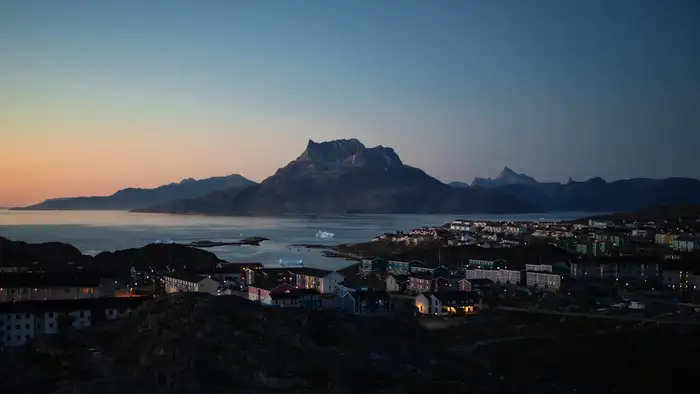
Photo by Aningaaq Rosing Carlsen on Unsplash